Last updated: 15 August 2026. Written by LineHQ, UK business phone number and call handling specialists.
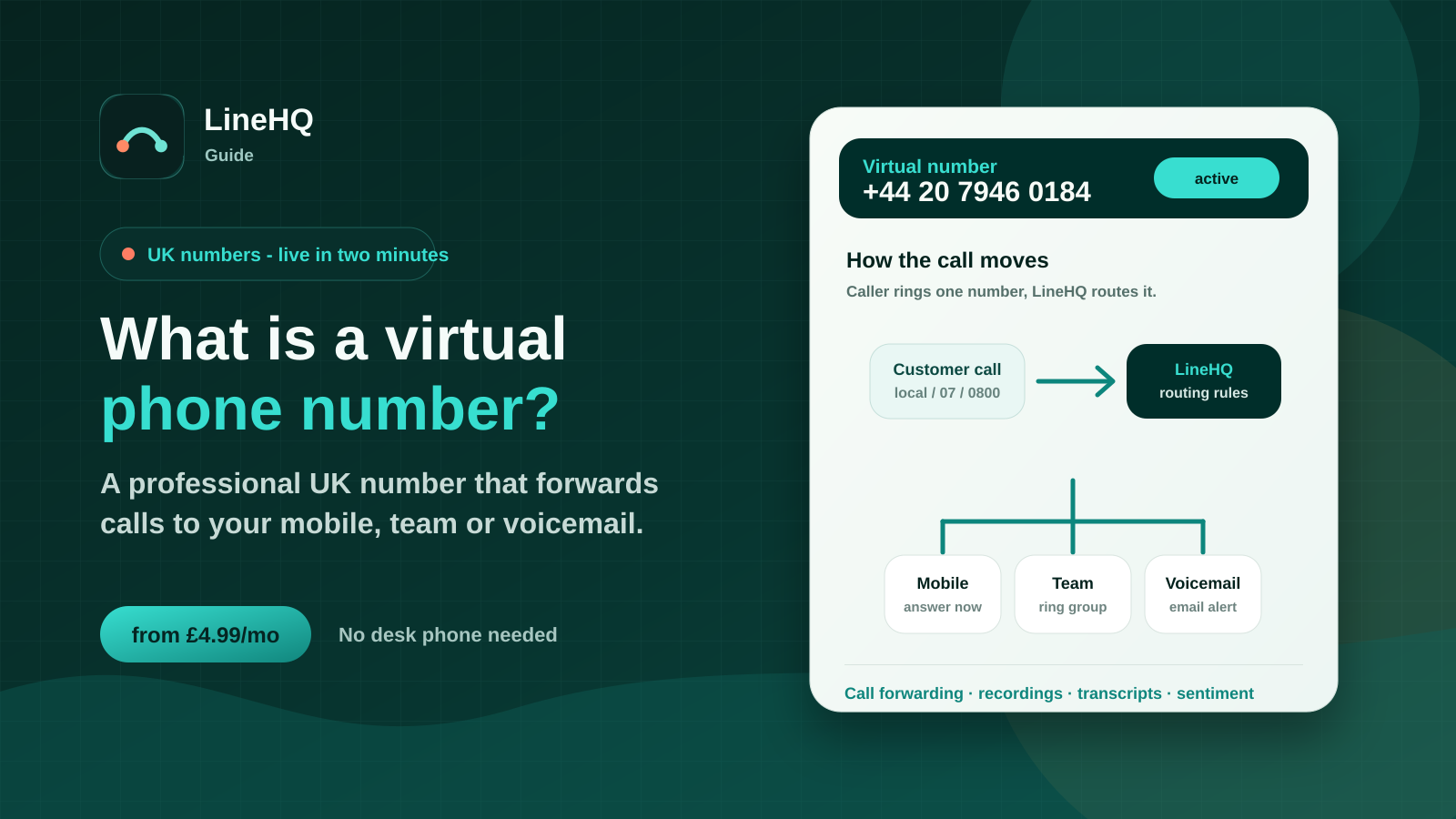
A virtual phone number is a UK business number that is not fixed to one desk, handset or phone line. Customers call one normal number, then the call is routed through an online phone platform to your mobile, team, voicemail, recording setup or call forwarding rules.
That makes a virtual number useful when you want one public business number without giving out a personal mobile or relying on an old office line. For a service business, clinic, tradesperson or small team, it keeps the caller experience simple while giving you more control behind the scenes.
How does a virtual phone number work?
The caller does not need to do anything different. They dial your published number from a mobile or landline. The difference is what happens after the call reaches the network: instead of ringing one fixed socket in one building, the call is sent to the routing rules you have chosen.
| Step | What happens | What the customer notices |
|---|---|---|
| Caller | The customer dials your published UK business number. | They see one clear number for your business. |
| Virtual number | The call reaches the hosted number instead of one fixed desk line. | Nothing unusual. It feels like calling any other business. |
| Forwarding and routing | Your rules decide whether the call rings a mobile, landline, team member or menu. | The call reaches the right person more often. |
| Voicemail or recording | If nobody answers, the call can go to voicemail-to-email, missed-call alerts or recording where lawful. | They get a clearer next step instead of a dead end. |
With LineHQ virtual phone numbers, the aim is to keep that setup practical: one number for customers, simple routing for the business, and enough call visibility to stop enquiries disappearing.
What types of UK number can be virtual?
Most small businesses choose a number type based on trust, location and how customers find them. Common options include:
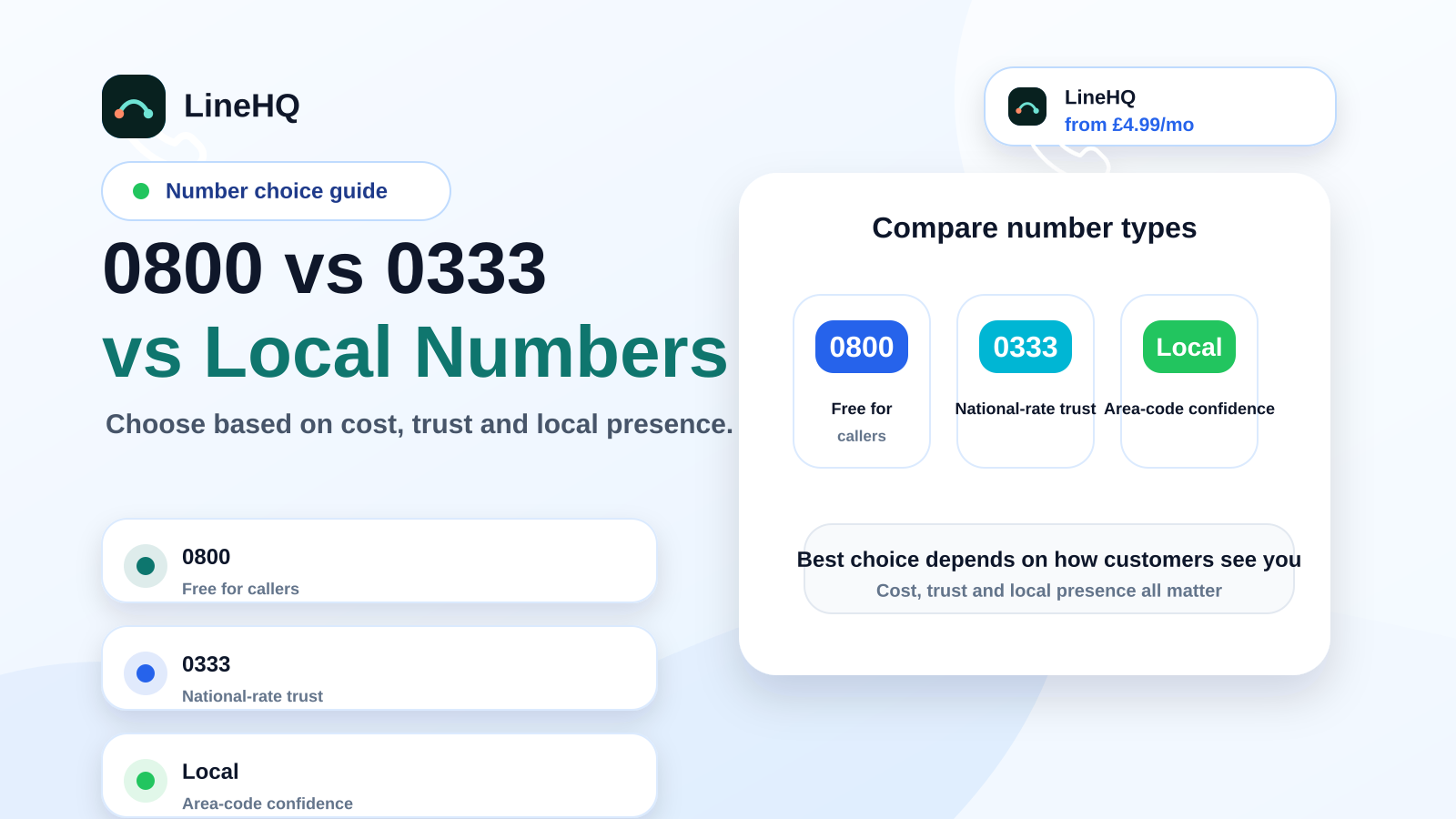
- Local 01 or 02 numbers for businesses that want a local presence in a town, city or service area.
- 0333 numbers for a national business number charged at the same rate as standard geographic numbers, according to Ofcom guidance on 03 numbers (accessed 15 August 2026).
- 0800 numbers for free-to-caller sales, support or campaign lines. Ofcom states that 080 and 0808 numbers are free from mobiles and landlines (accessed 15 August 2026).
- Existing landline numbers that can be ported to a hosted setup, if the number and provider details are eligible.
If you are still deciding, start with the way customers expect to contact you. A local trades business may get more trust from a local number. A business selling across the UK may prefer a national-looking 0333 number. A lead-generation line may suit 0800 if removing caller cost matters.
Is a virtual number the same as a business phone number?
A virtual number can be your main business phone number, but the terms are not identical. "Business phone number" describes the public number customers use. "Virtual phone number" describes how that number is hosted and routed.
In practice, many small businesses use one virtual number as their main business number. They put it on Google Business Profile, their website, invoices, vans, email signatures and ads, then forward calls to wherever the team is working that day.
What can you connect to a virtual phone number?
The number is the front door. The useful part is the call handling behind it. A simple setup might forward all calls to the owner. A more mature setup might route sales calls to one person, support calls to another, and missed calls into voicemail-to-email.
Typical options include:
- Call forwarding to mobile, landline or another business number.
- Business-hours routing, so calls go to different places during and after opening hours.
- Voicemail-to-email for missed calls and out-of-hours enquiries.
- Call recording, where you have a lawful reason and give callers a clear notice.
- Separate numbers for different locations, services or campaigns.
- Simple menu options, often called an IVR or auto attendant.
The right setup is usually the simplest one that stops missed calls. For many small businesses, that means a clear number, sensible forwarding rules and voicemail that reaches the right inbox quickly.
How much does a virtual phone number cost?
Costs vary by provider, number type, usage and features. The usual parts are number rental, a monthly plan, call forwarding charges and any extras such as recording, menus or transcription. LineHQ publishes current package details on the pricing page.
When comparing providers, check the full call handling cost, not just the headline monthly fee. A cheap number can become poor value if forwarding rates, call recording, porting or support are unclear.
When is a virtual phone number useful?
A virtual number is useful when the public number should stay stable but the people answering calls may change. That is why it suits small businesses where owners are often mobile, remote, on site or sharing call duties with a small team.
Good use cases include:
- A tradesperson who wants a business number on Google without publishing a personal mobile.
- A clinic or appointment-led business that needs calls to reach reception in opening hours and voicemail after hours.
- A consultant or agency that wants one public number while calls can ring a mobile or assistant.
- A business running campaigns where separate numbers help show which enquiries came from which channel.
- A company moving away from an old landline but wanting customers to keep using the number they already know.
When is a virtual phone number not enough?
A virtual number is not always a full contact centre. If you need advanced agent reporting, heavy outbound dialling, complex CRM integrations or a large helpdesk workflow, you may need a broader VoIP or contact centre system.
It also should not be used to make a business harder to identify. UK businesses still need clear contact details, honest caller information and proper handling of recording notices. The point is to make calls easier to manage, not to hide who is answering.
Can you keep an existing number?
Often, yes. Number porting can move an existing business number from one provider to another, subject to the current provider, account details and porting checks. The important rule is simple: do not cancel the old service before the port completes.
If your existing number already appears on vans, directories, Google, invoices or repeat-customer paperwork, keeping it can be worth the extra planning. A new setup is helpful; losing a known number by rushing the move is not.
How should a small business choose a virtual number?
Work backwards from caller intent. If most calls are local, use a number that feels local. If you serve the whole UK, use a number that does not tie you to one city. If the phone line is for support or sales, make the cost and call handling clear.
Then choose the minimum routing setup that fixes the real problem. If calls are being missed while the owner is on site, forwarding and voicemail-to-email may be enough. If calls are going to the wrong person, a simple menu or different numbers for different services may help.
FAQs about virtual phone numbers
Do customers know it is a virtual phone number?
Not usually. Customers dial a normal UK number. The hosted routing happens behind the scenes, so the caller experience is much the same as calling any other business number.
Can a virtual number ring my mobile?
Yes. One of the common uses is forwarding business calls to a mobile while keeping your personal mobile number private.
Can I use a virtual number on Google Business Profile?
Many businesses use a virtual number as their published business number. Make sure the number is answered consistently and matches the contact details you want customers to use.
Are 0333 numbers expensive for callers?
No. Ofcom explains that calls to 03 numbers cost no more than calls to 01 and 02 numbers and must count towards inclusive minutes in the same way (accessed 15 August 2026).
What is the easiest way to start?
Choose the number type, decide where calls should ring first, and set a sensible missed-call route. LineHQ can help with virtual numbers, call forwarding and business phone number setup without turning it into a large phone system project.
If you want one clear number for customers and better control over missed calls, start with LineHQ virtual phone numbers or compare options on the pricing page.