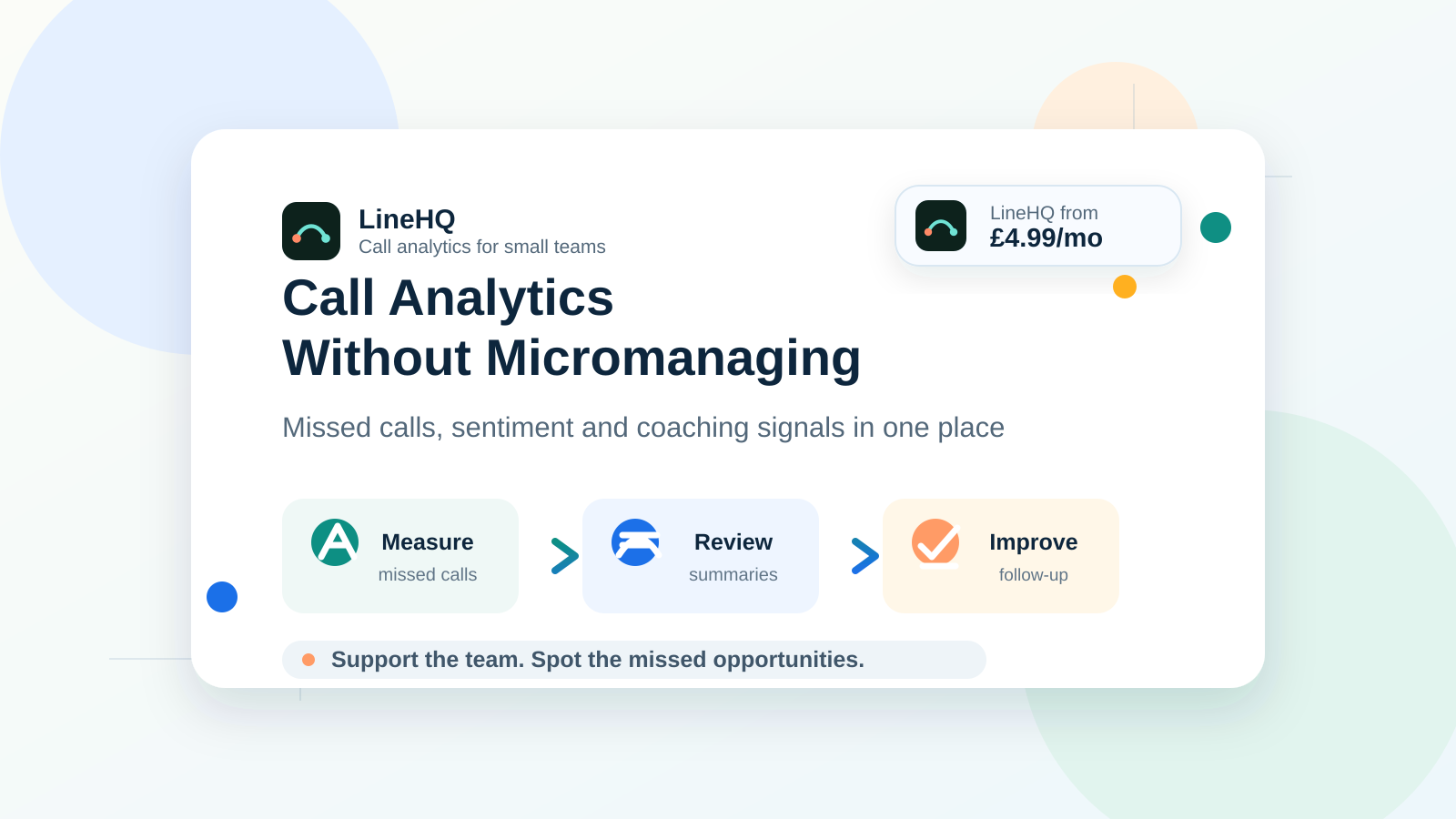
Call analytics for small business means using missed-call data, call records, voicemail, transcripts, AI summaries and caller sentiment to see where follow-up is working and where customers are slipping through. For a small team, the aim is not to watch every call. It is to spot patterns, coach fairly and make sure important callbacks happen.
That distinction matters. A large contact centre might review agents by scorecards and strict call targets. A small business usually needs something simpler: who called, what happened, whether anyone followed up, and whether the customer sounded happy, confused or frustrated.
What call analytics means for a small team
For a small team, call analytics should answer practical questions:
- How many calls are missed during working hours?
- Which missed calls were returned, and which were left hanging?
- Which team members are handling the most calls?
- What are customers asking for?
- Are there repeated issues that need a better process, price page or support answer?
- Do some calls need urgent attention because the caller sounded unhappy?
You do not need a wallboard full of numbers to answer those questions. You need a clean record of calls and a routine for checking the right ones.
LineHQ is built around that kind of visibility. A virtual phone number gives the business one main number, while the call history, recordings, transcripts and notes help the owner see what happened afterwards.
The difference between useful visibility and micromanagement
Call monitoring can feel uncomfortable if it is introduced badly. If staff think every word is being judged, they may become guarded rather than better. Useful visibility is different.
The right framing is simple: the business is checking whether customers are being looked after, not trying to catch people out.
That means using call analytics to find patterns first. For example, you may discover that most missed calls happen between 12:00 and 14:00, or that quote enquiries often go to voicemail when one person is on site. That points to a routing or staffing fix, not a blame conversation.
It also means reviewing a small number of calls with purpose. A weekly check of missed calls, unanswered voicemails and unhappy-sounding calls is more useful than replaying everything.
Metrics that matter: missed calls, callbacks, voicemail, sentiment and outcomes
Small businesses should avoid vanity call metrics. Total call volume is useful, but it does not tell you whether the team is winning work or keeping customers calm.
Start with these five measures:
Missed calls
Missed calls are often where money leaks out. A missed call from a new enquiry, existing customer or supplier can quickly turn into another business winning the conversation. If this is already a concern, read LineHQ's guide to the true cost of a missed call.
Callback completion
A missed call is not always a problem if someone calls back quickly. The real issue is the missed call that nobody owns. Track whether each important missed call has a clear next step.
Voicemail activity
Voicemail to email makes this easier because messages can be seen outside the phone system. The point is not just receiving the voicemail. It is getting it in front of the right person quickly.
Caller sentiment
Sentiment is not perfect, but it is useful as a triage signal. If a caller sounds frustrated, urgent or confused, that call should move up the follow-up list. It gives owners a way to catch problems before they become reviews, refunds or lost accounts.
Outcomes
Call data is most useful when it is connected to an outcome. Was the enquiry quoted? Did the customer get an answer? Was the job booked? Did the complaint get resolved?
How transcripts and AI summaries make review faster
Most owners do not have time to replay recordings one by one. This is where transcripts and AI summaries help.
A transcript lets you search for the exact request, name, product, location or issue. If someone says they called about an invoice, a repair, a missed delivery or a quote, the team can find that detail without listening to the whole recording.
An AI summary gives the short version: who called, what they wanted, what was agreed and what needs doing next. Used sensibly, this turns call review from a slow admin task into a quick daily scan.
For example, a manager could check yesterday's missed calls in ten minutes:
- Open the missed-call list.
- Read the transcript or summary for calls with voicemail.
- Flag calls with negative or urgent sentiment.
- Assign each callback to a named person.
- Check at the end of the day that the list is clear.
This is especially useful when call handling sits across a small team. A small business phone system should help people share context, not hide call history on one mobile.
How to spot coaching moments without replaying every call
Good call coaching does not need to feel heavy. The owner or manager can review a few calls where the data suggests there is something to learn.
Useful coaching moments include:
- A new enquiry where the next step was vague.
- A caller who sounded frustrated and had to repeat information.
- A quote request where the team did not capture enough detail.
- A support call that could be answered better with a short script or help page.
- A repeated question that shows the website is missing key information.
The tone matters. Instead of saying, "You handled that badly," a manager can say, "This question came up three times last week. Let's agree the best answer so everyone handles it the same way."
That is the useful side of call monitoring software for a small business. It supports the team and improves the customer experience without turning every call into a test.
How to build a weekly call-review habit
A simple routine beats a detailed dashboard that nobody opens. For most small teams, a weekly call review can be enough.
1. Check missed calls first
Look for missed calls during open hours and after important campaigns. If several calls were missed in the same window, check the routing. You may need call forwarding, a better overflow route or clearer cover during lunch breaks.
2. Review voicemails and transcripts
Scan the short summary before listening to any recording. Only open the full call recording when the detail matters.
3. Prioritise negative or urgent sentiment
Unhappy callers should not sit in a normal queue. Use sentiment as a prompt to check whether someone needs a same-day response.
4. Pick one coaching point
Do not overload the team. Choose one call-handling improvement each week. That might be how to ask for a postcode, how to close a quote call, or how to explain a service charge.
5. Check whether the fix worked
Look at the same metric the following week. Did missed calls drop? Did callbacks happen faster? Are fewer people leaving the same confused voicemail?
Why this works alongside a virtual phone number
A virtual number gives the business a stable public number. The analytics behind it show what happens when people call.
That pairing is useful because many small businesses still rely on personal mobiles, shared inboxes and memory. Calls get answered, but the trail is thin. If the customer rings back, nobody is quite sure who spoke to them or what was promised.
With LineHQ, the number, call routing, call records, recordings, transcripts and follow-up context sit in one place. You can present a professional number to customers while still giving the team the information they need to respond properly.
It also keeps the setup flexible. A business can use one number for sales, route calls to different people, send voicemails to email, and review patterns without giving every staff member a separate public mobile number.
If you are comparing costs, LineHQ pricing starts from £4.99 per month.
FAQ
What call analytics should a small business track?
Track missed calls, callback completion, voicemail volume, call duration, caller sentiment and the outcome of important enquiries. Start with the numbers that affect customer response, not every metric available.
Is call monitoring legal in the UK?
Call recording and monitoring can be used in the UK, but businesses need a lawful basis, clear internal rules and appropriate customer or staff notices where required. For sensitive sectors, get proper legal advice before recording calls as standard.
How can I review calls without micromanaging?
Review patterns first, then check selected calls linked to missed enquiries, complaints, unclear next steps or training needs. Make the aim better customer follow-up, not catching staff out.
Can AI summaries help with team coaching?
Yes. AI summaries can highlight the customer's request, the agreed next step and any unresolved issue. They should support human judgement, not replace it.
What should I do with unhappy caller sentiment?
Treat it as a priority flag. Check the call, confirm what the customer needed, and make sure someone owns the response. Sentiment is most useful when it prompts a faster human follow-up.
Make every call easier to follow up
Call analytics works best when it stays practical. Missed calls, voicemails, transcripts, AI summaries and sentiment should help your team respond faster, not create another reporting chore.
LineHQ gives small UK businesses a professional phone number with call routing, voicemail, recordings and call intelligence in one place. Start with a number from £4.99 per month, or compare plans on the pricing page.