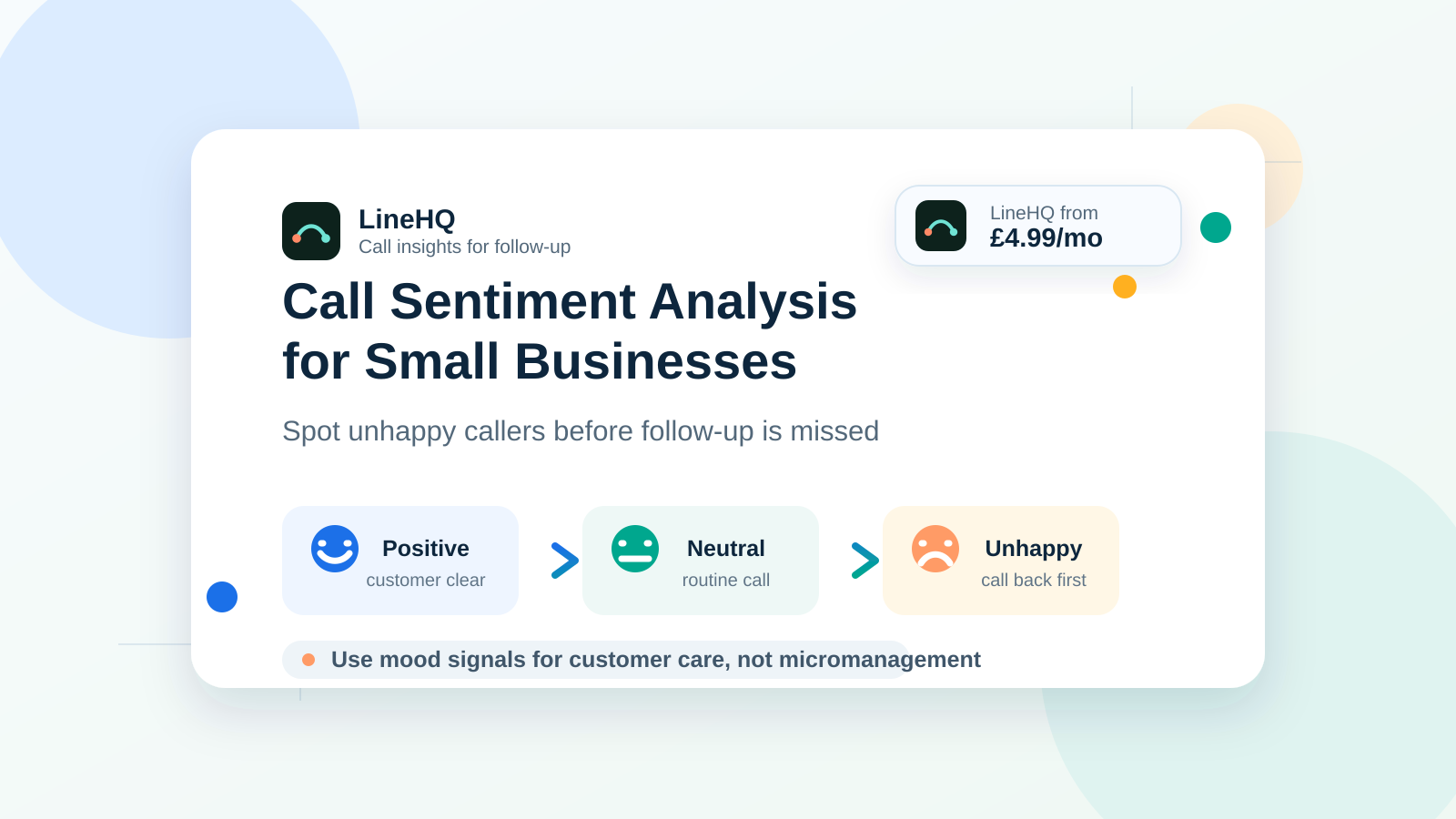
Call sentiment analysis uses AI to flag whether a phone conversation sounded positive, neutral or unhappy. For small businesses, it is most useful as an early warning system: it helps you find urgent callbacks, complaints and awkward conversations faster, without turning every customer call into a staff scorecard.
What is call sentiment analysis?
Call sentiment analysis is a way of reading the tone of a phone call after it has happened. The system looks at the call transcript, wording and context, then labels the conversation with a simple mood signal such as positive, neutral or negative.
That label is not the full story. It is a pointer. A negative call might be a frustrated customer, a rushed quote request, a complaint about timing, or someone who simply had a bad signal and repeated themselves. The value is that you know where to look first.
For a small team, that can save a lot of time. Instead of replaying every call recording, you can scan the calls that may need follow-up and check the details before you ring the customer back.
Why caller mood matters for small businesses
Most small businesses do not lose customers because one person made one mistake. They lose customers when small signals are missed: a caller sounds unsure, a promised callback is not made, or a complaint is buried inside a busy day.
Call sentiment helps bring those moments to the surface. A trades business can spot an unhappy caller before a review appears. A clinic can notice when a patient sounded worried or confused. A consultant can see which enquiry needs a careful follow-up rather than a quick template email.
It also helps owners who are not always near the phone. If calls are routed through a small-business phone system, the owner can still review patterns at the end of the day without sitting beside the team.
Happy, neutral and unhappy calls: what each can tell you
A positive call usually means the customer left with what they needed. It can show which staff, scripts or processes are working well. These calls are useful for training because they show what good service sounds like in your own business.
A neutral call is often routine: booking, pricing, directions, opening hours, a callback request or a simple question. These calls still matter because they show what people ask for repeatedly. If the same question appears often, your website or phone menu may need clearer wording.
An unhappy call needs closer attention. It may include frustration, urgency, confusion or a complaint. The point is not to punish the person who answered. The useful question is simpler: what does this customer need next, and can we prevent the same issue next week?
How sentiment works with transcripts and AI summaries
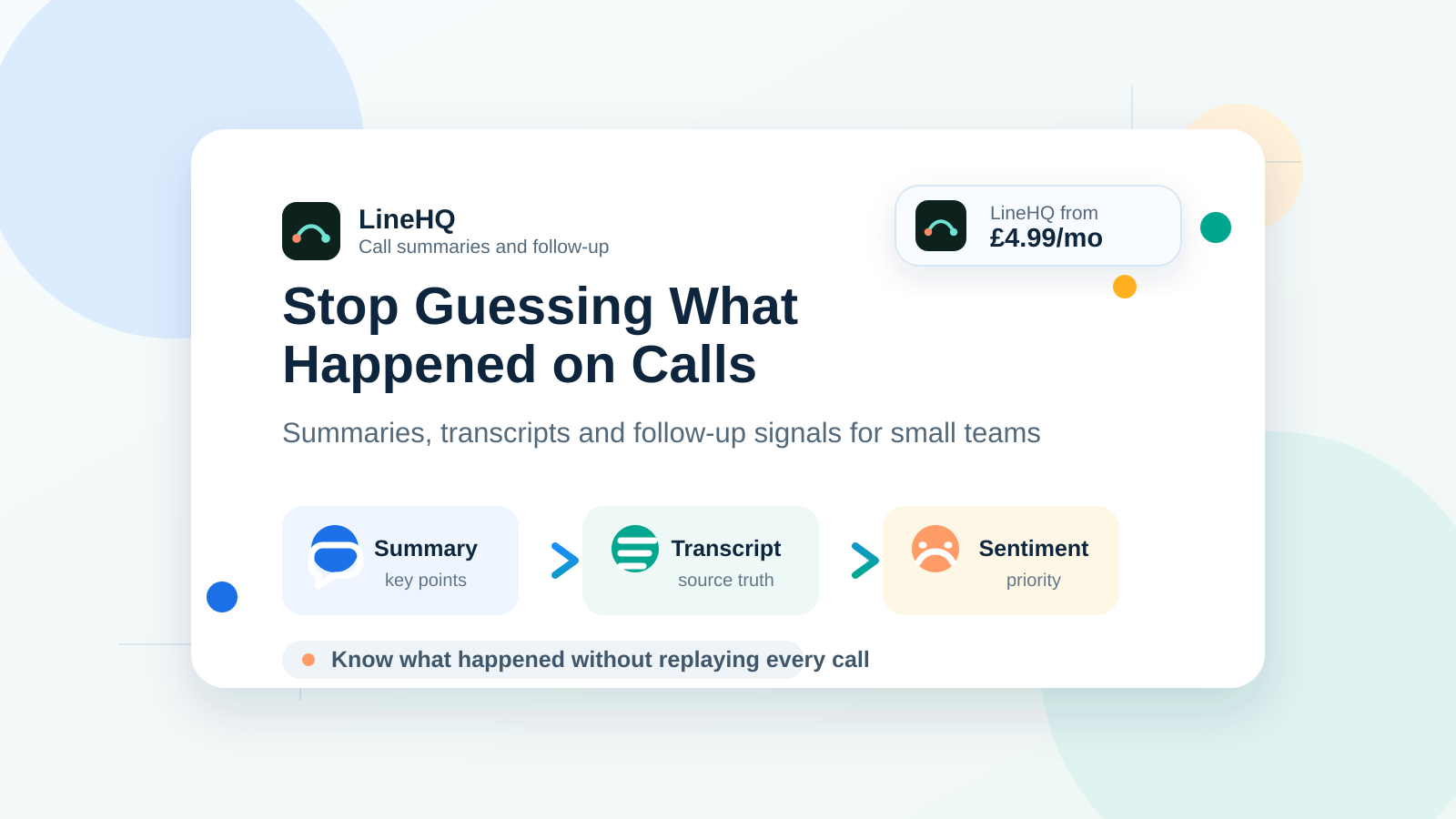
Sentiment is strongest when it sits beside a transcript and a short call summary. The transcript gives you the source of truth. The summary tells you the main point. The sentiment label tells you whether the call might deserve a quicker look.
Used together, they make call review lighter. You can search for a name, job address, price, appointment time or promise made on the call. Then you can use the summary to understand the outcome without replaying the full audio.
This is especially useful for businesses that already use voicemail to email, call forwarding or a virtual receptionist. The more calls move through one system, the easier it is to keep a clean record of what customers actually asked for.
When to check sentiment before calling someone back
Sentiment is most useful before the follow-up call. If two people need a callback and one of them sounded annoyed, worried or confused, that person may need the first call back.
It can also help after missed calls. If a customer leaves a voicemail with an urgent tone, you can treat it differently from a routine message. That does not mean the system replaces judgement. It simply gives you a better starting point.
There is a practical rhythm here: check missed calls, scan summaries, review any unhappy sentiment, then make callbacks in a sensible order. That is far easier than trying to remember every conversation from a busy morning.
Limits: sentiment is a signal, not a final judgement
AI call sentiment can be helpful, but it is not perfect. Tone, accent, background noise, sarcasm and short calls can all affect how a system reads the conversation.
That is why sentiment should not be used as a blunt staff performance measure. It works better as a customer-care prompt. If a call is marked unhappy, listen to the relevant part or read the transcript before deciding what happened.
You should also be clear with your team about how call records are used. In the UK, call recording and customer data need sensible handling. If you record or analyse calls, keep your privacy notices up to date and get proper advice where needed. This article is practical information, not legal advice.
How LineHQ keeps it practical for everyday call follow-up
LineHQ is built for small businesses that need clearer call handling without a heavy call-centre setup. A business number can route calls to the right person, send voicemails to email, keep call records together and support follow-up from one place.
For sentiment, the useful job is simple: help you find calls that deserve attention. The same call record can sit alongside the recording, transcript and summary, so you are not guessing from a missed-call notification or a half-remembered conversation.
If you are comparing tools, look for a setup that makes call review quick, keeps the original record easy to find, and does not make the team feel watched for the sake of it. Visibility should help customers get better follow-up.
FAQs about call sentiment analysis
Is call sentiment analysis accurate?
It can be useful, but it should be treated as a guide rather than a final answer. Always check the transcript or recording before making a decision about a sensitive call.
Can it detect angry customers?
It can often flag calls that sound negative, frustrated or urgent. The wording, transcript and call outcome matter too, so use sentiment to prioritise review rather than to label a customer permanently.
Is it only for call centres?
No. Small businesses can use call sentiment to spot follow-up risks, complaints, missed details and customer service issues without running a formal call-centre operation.
Should I use it to judge staff?
Not on its own. Sentiment is better used for customer follow-up and coaching moments. One label cannot explain the whole conversation or the reason a caller sounded unhappy.
How does it work with call recordings?
The recording keeps the original audio. The transcript makes the call searchable. The sentiment label helps you decide which calls may need review first.
Need one place for call records, voicemail, recordings, transcripts and follow-up signals? Compare LineHQ plans or start with call recording so urgent and unhappy callers are easier to spot.