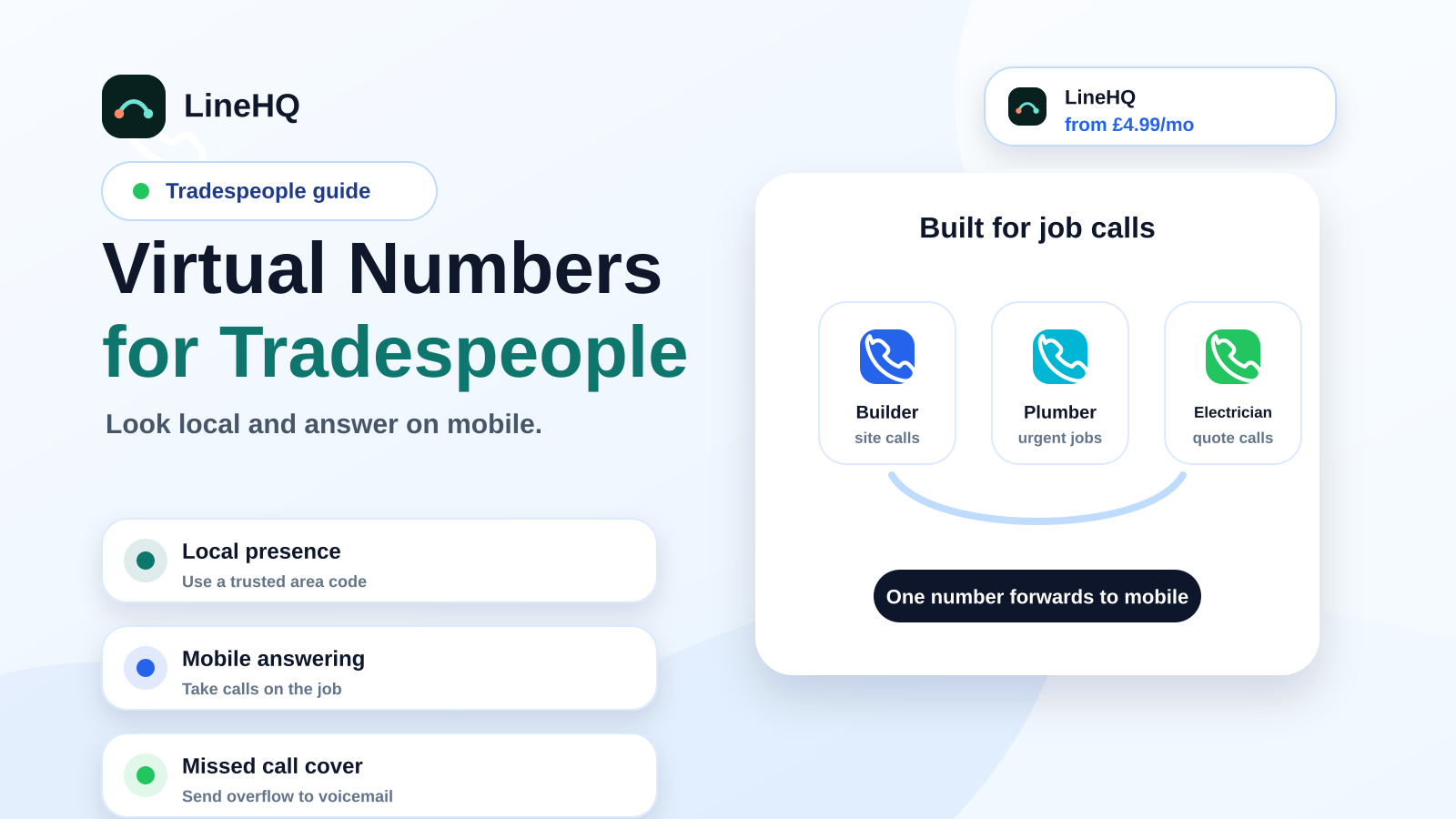
A virtual phone number lets tradespeople take business calls on a mobile without publishing a personal number. Plumbers, electricians, builders and decorators can use one local, 0333 or 0800 number, forward it to the right phone, catch missed calls and keep the same public number as the business grows.
That makes it a practical step between using a personal mobile and buying a full office phone system. You still answer on site, but customers see a proper business number.
Why tradespeople need a separate business number
Many sole traders start by using their personal mobile. It is quick, and it works at first. The problem comes later, when that same number is printed on quotes, invoices, old flyers, review sites and customer phones.
A separate business number helps you:
- look more established when customers compare local trades online;
- keep work calls separate from family and personal calls;
- avoid publishing your private mobile number everywhere;
- route calls to another person when you are unavailable;
- track which enquiries came through your business number;
- keep the same public number if you change mobile network or handset.
That last point matters. Changing your mobile number is annoying. Changing the number on your van, website, directory listings and saved customer contacts is worse.
Personal mobile vs business number for tradespeople
| Setup | Best for | Risk |
|---|---|---|
| Personal mobile | Very early-stage work | Private number spreads across old customers and public listings |
| Second mobile or SIM | One person separating work and personal calls | The number still depends on one handset |
| Virtual business number | Trades that want one public number with mobile forwarding and missed-call fallback | You need to set routing rules properly |
How a virtual number works for a trade business
A virtual number is a normal UK business phone number that routes calls over the internet and phone networks to the destination you choose. For most tradespeople, that destination is a mobile.
The customer dials your business number. LineHQ forwards the call to your mobile, or to another team member, or to voicemail if nobody can answer. You do not need a separate landline at home or in a unit.
If you want a fuller explanation, read our guide to what a virtual phone number is and how it works.
For a trades-focused landing page, start with phone numbers for tradesmen. You can also compare business phone numbers, call forwarding, voicemail-to-email and pricing. If you are comparing suppliers, use the virtual number provider guide for tradespeople.
Common setups for plumbers, electricians, builders and decorators
Plumbers and heating engineers
Emergency and same-day calls are time sensitive. A local or business number can forward straight to your mobile during working hours, then switch to voicemail-to-email when you are on a job or out of hours. That means you can still pick up the details without stopping halfway through a repair.
Electricians
Electricians often split time between domestic work, commercial sites and inspections. A virtual number keeps the public-facing number consistent while calls can route to the right person. If you have an apprentice or office helper, missed call fallback can stop enquiries sitting unanswered all day.
Builders and small teams
Builders are rarely sitting next to a desk phone. Calls can ring the owner first, then a colleague, then voicemail. This is useful when one person is on site and another is pricing work or ordering materials.
Decorators and mobile service providers
For decorators, cleaners, landscapers and other local service providers, the main benefit is privacy and consistency. You can advertise one business number, answer it on your mobile, and keep the same number as the business grows.
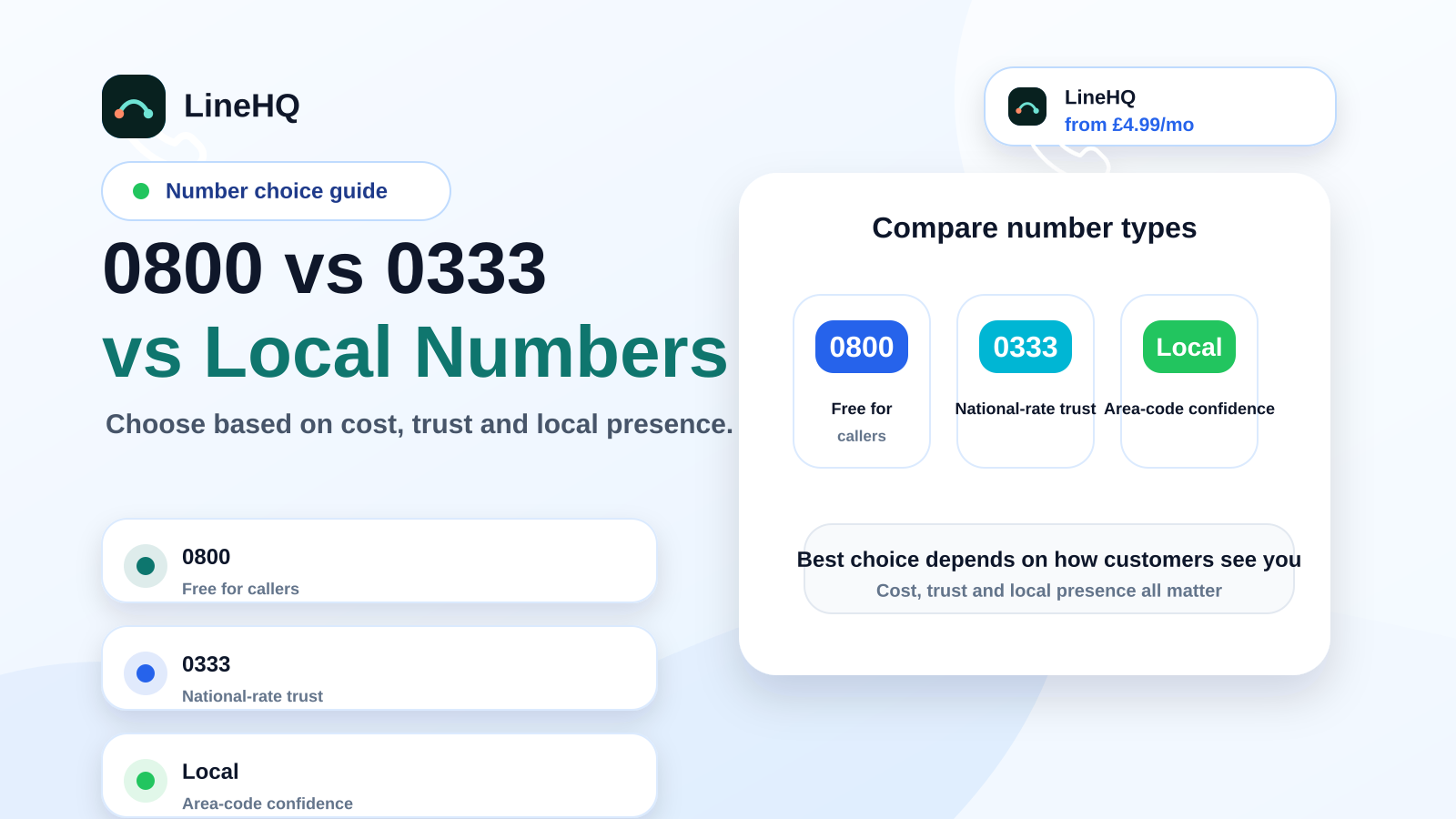
Local number, 0333 number or 0800 number?
Most trade businesses do well with either a local 01/02 number or a 0333 number.
- Local numbers are useful when trust is tied to a service area, such as Hull, Leeds, Manchester or London.
- 0333 numbers feel national without looking like a premium-rate number. They are often a good fit for trades covering several towns.
- 0800 numbers can work for larger operators, but many sole traders do not need them at the start.
If you are unsure, compare the options in our guide to 0800, 0333 and local numbers.
Keeping your personal mobile private
Publishing your personal mobile number can become awkward. Old customers may still call years later. Sales calls and spam can follow you around. If you ever hire staff, sell the business or change how you work, the number is hard to untangle.
With a virtual number, your business number stays public and your personal mobile stays private. Customers ring the business number, but the call still reaches your phone. If you need to change where calls go, you change the forwarding rule rather than every listing on the internet.
For a deeper look at this setup, see our guide on how to divert business calls to your mobile without giving out your personal number.
Missed calls, voicemail and voicemail-to-email
Tradespeople miss calls for good reasons. You might be speaking to a customer, using tools, driving or working somewhere with poor signal. The issue is not missing the call. The issue is missing the enquiry completely.
A sensible call setup should include:
- a clear voicemail greeting with your business name;
- voicemail-to-email so messages are easier to pick up later;
- missed call visibility so you can ring back quickly;
- simple call forwarding for busy days or holidays.
That setup is especially useful for jobs where the customer wants a quick response, such as leaks, electrical faults, damaged locks or urgent repairs.
Do tradespeople need a full phone system?
Not always. A small trade business usually needs a simple setup first: one public number, mobile call forwarding, voicemail and the option to add more routing later.
A full VoIP phone system can be useful once you have office staff, multiple engineers or a call-handling process. But if you are a sole trader or a small team, a virtual number is often the cleaner starting point.
LineHQ is built for this kind of setup: a UK business number that can be live quickly, with call forwarding and voicemail features that suit small teams rather than enterprise phone departments.
What to put on your website, van and Google listing
Use one consistent business number everywhere customers might find you:
- your website contact page;
- Google Business Profile;
- van signage;
- quotes and invoices;
- trade directories;
- social media pages.
Consistency helps customers recognise you and reduces confusion. It also means you can change the mobile behind the scenes without changing the number customers dial.
Final thought
For most tradespeople, the best phone setup is not complicated. It is a business number customers trust, forwarding that reaches you on site, and a fallback for the calls you cannot take.
If you want a business number for your trade without a desk phone or long setup process, choose a LineHQ business phone number or book a quick demo.