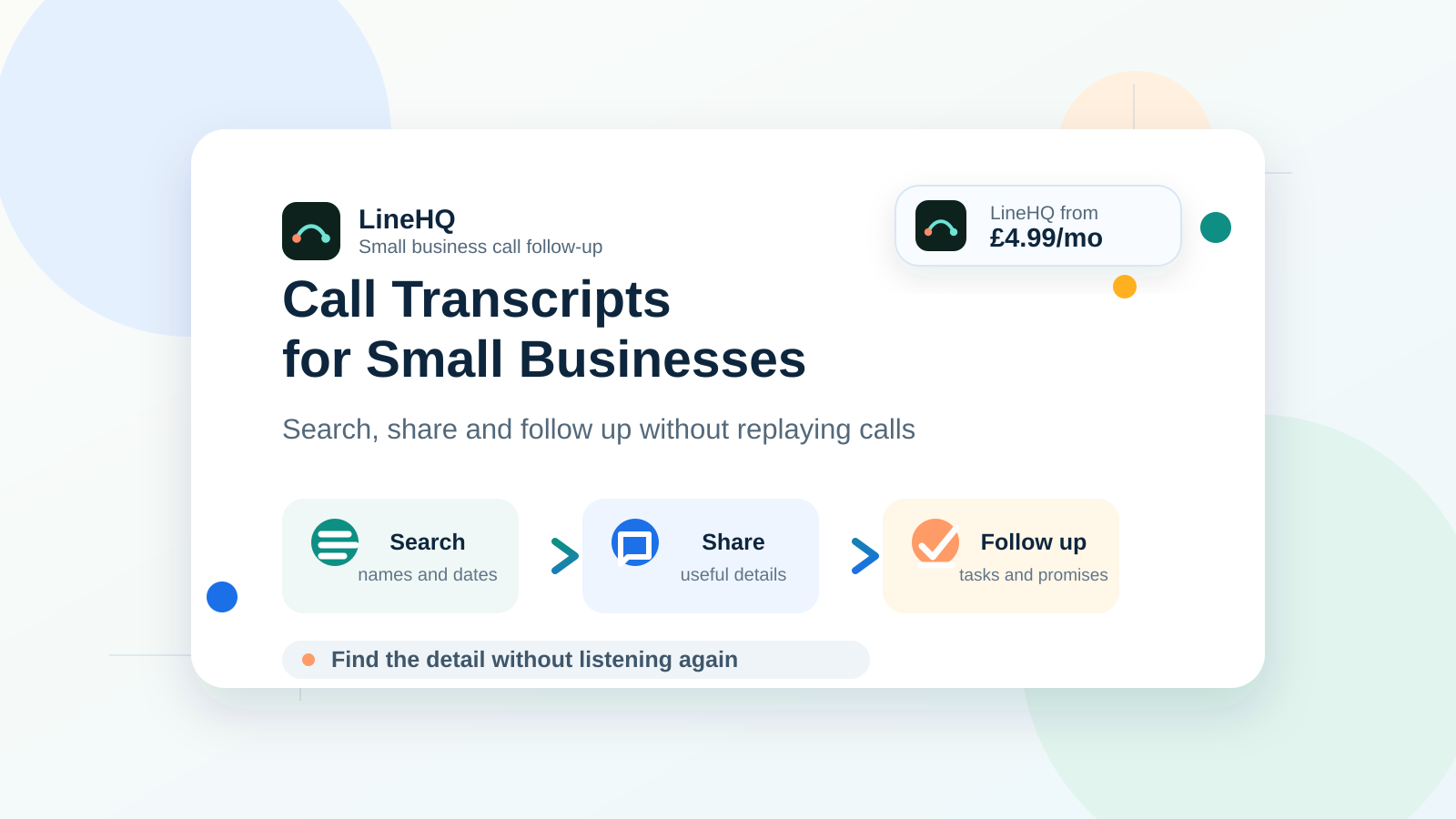
Call transcription for business turns recorded phone calls into searchable text, so you can find names, numbers, dates, prices and promises without replaying the whole call. For small teams, transcripts make follow-up easier, support clearer call summaries, and help staff check what a caller actually said before they reply.
What is call transcription for business?
Call transcription for business is the process of converting a phone call recording into written text. Instead of relying only on an audio file, you get a text record that can be searched, skimmed and used when preparing the next customer step.
For a small business, the value is practical. A caller may mention a job address, preferred appointment time, order detail, reference number or complaint. A transcript gives the team a quicker way to check that detail without listening through the full recording again.
Why a transcript is easier to search than an audio recording
Audio recordings are useful, but they are slow to review. If you only need one sentence from a six-minute call, replaying the recording can become a time drain. Phone call transcripts are easier to scan because the words are visible.
That matters when someone asks, "what did the caller say?" or "did we agree Tuesday or Thursday?" With a transcript, you can search for a name, date, product, location or phrase and jump straight to the relevant part of the conversation.
Details transcripts help recover: names, dates, numbers and promises
The details that cause problems are often small. A missed digit in a phone number, a wrong postcode, or an unclear promise can lead to a poor follow-up. Business call transcription helps recover those details after the call.
| Detail | Why it matters | How the transcript helps |
|---|---|---|
| Names and company names | Staff need to address the right person and avoid duplicate records. | Search the caller's wording instead of guessing from memory. |
| Dates and appointment times | Small mistakes can create missed visits or double bookings. | Check the exact part of the conversation where the date was agreed. |
| Phone numbers and references | One wrong digit can stop the team following up. | Review the surrounding context and compare it with call records. |
| Promises and next steps | Customers remember what was agreed. | Confirm whether someone promised a quote, callback, visit or refund review. |
How transcripts support AI call summaries
A call summary is only useful if it is grounded in what was actually said. Transcripts give AI call summaries a clearer source to work from because the conversation is already available as text.
That does not mean a summary should replace the record. The summary is the quick version; the transcript is where you check the wording when the detail matters. Used together, they help a busy owner or manager understand the call quickly, then verify the specific line if needed.
LineHQ's related guide on AI call summaries for business explains how summaries can help small teams review calls without depending on memory alone.
Practical uses for trades, clinics, consultants and small teams
Call transcripts are not just for large contact centres. They can be useful anywhere phone conversations affect customer service, bookings, quotes or follow-up.
- Trades: check job addresses, access notes, fault descriptions and promised quote times.
- Clinics: confirm appointment requests, callback details and non-clinical admin notes.
- Consultants: review discovery calls, agreed next steps and client questions before sending a proposal.
- Small teams: help another team member pick up the conversation when the original caller is unavailable.
If calls already come through a business phone number, transcripts can sit alongside call history, missed calls, voicemail and routing records. That gives the team a fuller picture than a mobile call log alone.
Privacy and call recording reminders for UK businesses
Call transcription normally depends on call recording, so UK businesses need to think about privacy, lawful basis, staff access, retention and how callers are informed. This is practical information, not legal advice.
As a starting point, only record and transcribe calls where you have a clear business reason, keep access limited to people who need it, and avoid holding recordings or transcripts for longer than needed. Sensitive calls may need extra controls or may not be suitable for transcription at all.
For a fuller overview, read LineHQ's guide to UK call recording rules for small businesses. You can also review LineHQ's call recording page before deciding which calls should be recorded.
How to turn transcripts into better customer follow-up
The best use of transcripts is not collecting text for its own sake. It is turning phone conversations into clear follow-up.
- Check the key detail: search the transcript for the name, date, number, product or promise.
- Add the next action: create a callback, quote, booking, support task or note while the context is fresh.
- Share only what is needed: if another team member needs the detail, share the relevant part rather than the whole call where possible.
- Use the summary for speed: read the call summary first, then use the transcript to verify anything sensitive or specific.
If missed calls and voicemails are part of the same problem, voicemail to email and call forwarding can also help the team respond faster. To compare setup costs and features, see LineHQ pricing.
Frequently asked questions
Can phone calls be transcribed automatically?
Yes, many modern phone systems can automatically transcribe recorded calls. Accuracy depends on audio quality, accents, background noise and how clearly people speak, so important details should still be checked before action is taken.
Are call transcripts searchable?
Yes. A searchable transcript lets you look for names, dates, numbers, locations, products or phrases from the call. That is usually faster than replaying the whole recording to find one detail.
Do I still need call recordings if I have transcripts?
Usually, yes. A transcript is easier to search, but the recording is the original source. If wording, tone or accuracy matters, the recording can help you verify what the transcript says.
What about GDPR?
Call transcripts may contain personal data, so UK businesses should have a clear reason for creating them, restrict access, keep them only as long as needed and explain recording or transcription where appropriate. Get legal advice for regulated or sensitive use cases.
Can I share a transcript with my team?
You can share transcript details internally when there is a legitimate business need, but keep it proportionate. Share the relevant section where possible, avoid unnecessary personal data, and make sure access is limited to the right people.