AI call summaries for business give small teams a quick written recap of customer calls, so follow-up does not depend on memory or replaying every recording. A good summary should capture who called, what they needed, promises made, next steps and any signs that the caller was unhappy or ready to buy.
Most missed details are not dramatic. Someone asks for a quote. A customer mentions a deadline. A caller says they tried yesterday and nobody rang back. If that information sits only in a recording, it is easy to lose once the day gets busy.
Why customer calls are easy to forget once the day gets busy
Small businesses often handle calls between jobs, appointments, quotes, invoices and site visits. The call may be clear at the time, but five hours later the useful detail has blurred.
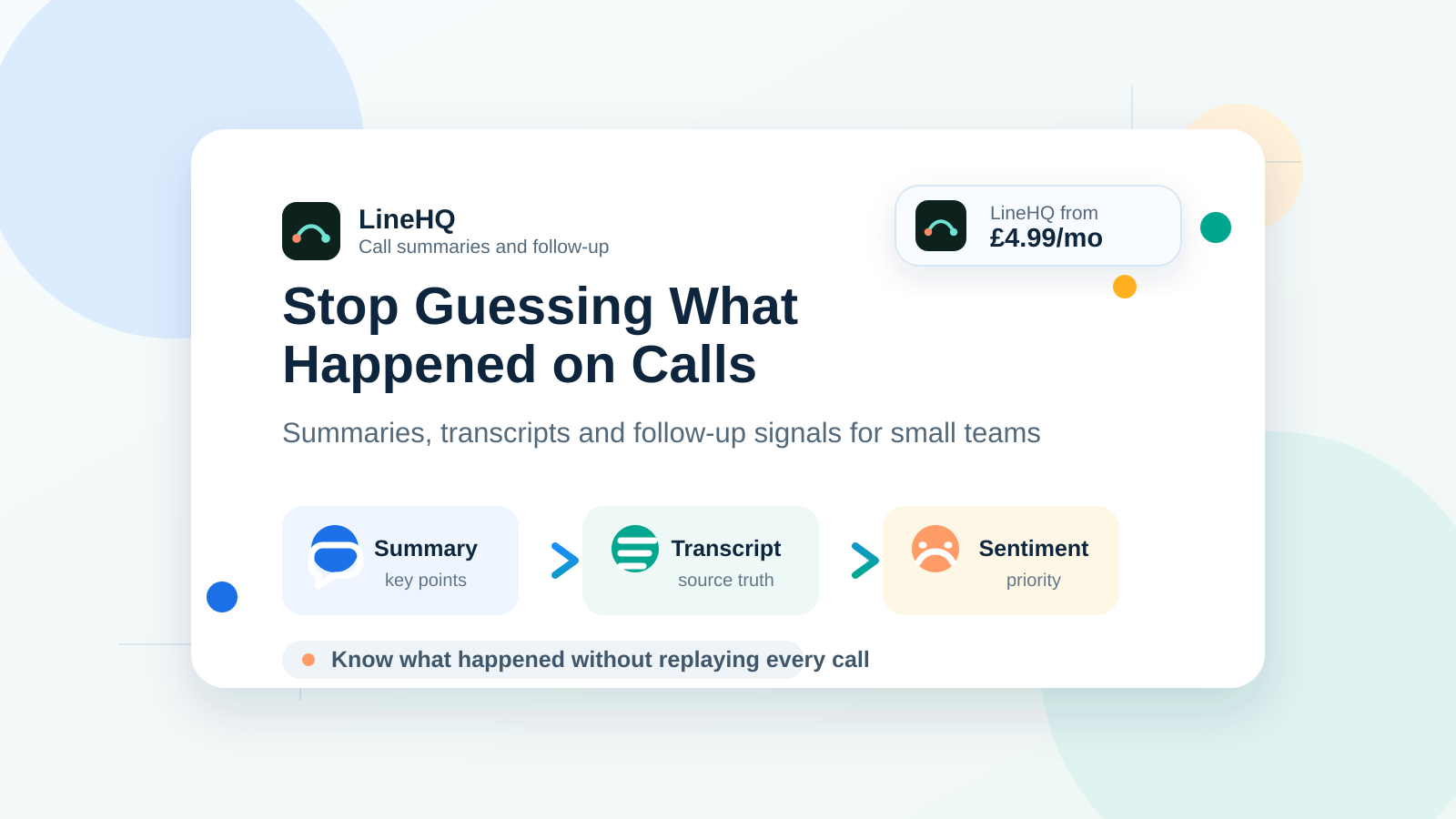
That is where call recording, call transcripts and summaries work well together. Recording keeps the original call. The transcript gives you the words. The summary gives you the practical version a person can act on quickly.
What an AI call summary should capture
A useful AI phone call summary is not just a short paragraph saying someone rang. It should help the next person understand the call without starting again from scratch.
- Caller details: name, business, phone number and any useful context mentioned on the call.
- Reason for the call: quote request, support issue, booking, complaint, chasing an update or general enquiry.
- Important facts: dates, prices discussed, locations, order details, deadlines or agreed preferences.
- Promises made: who said they would call back, send a quote, check stock or confirm a booking.
- Next step: what needs to happen now, and who should own it.
For a busy team, that makes customer follow-up less dependent on one person remembering the exact wording of a call.
How call transcripts keep the source of truth
A summary is useful because it is short. A transcript is useful because it is checkable. If someone wants to confirm a quote detail, a complaint, a promised callback or the caller's wording, the transcript gives them somewhere to look.
This matters for small businesses because calls often involve practical details: addresses, appointment times, product names, job requirements and price expectations. A searchable transcript is easier to use than replaying a ten-minute call from the beginning.
LineHQ is built around this practical call-handling flow: take the call on your business number, keep the call record in one place, then use the details for better follow-up. You can pair it with voicemail to email for calls that are missed or arrive outside working hours.
How caller sentiment helps you prioritise follow-up
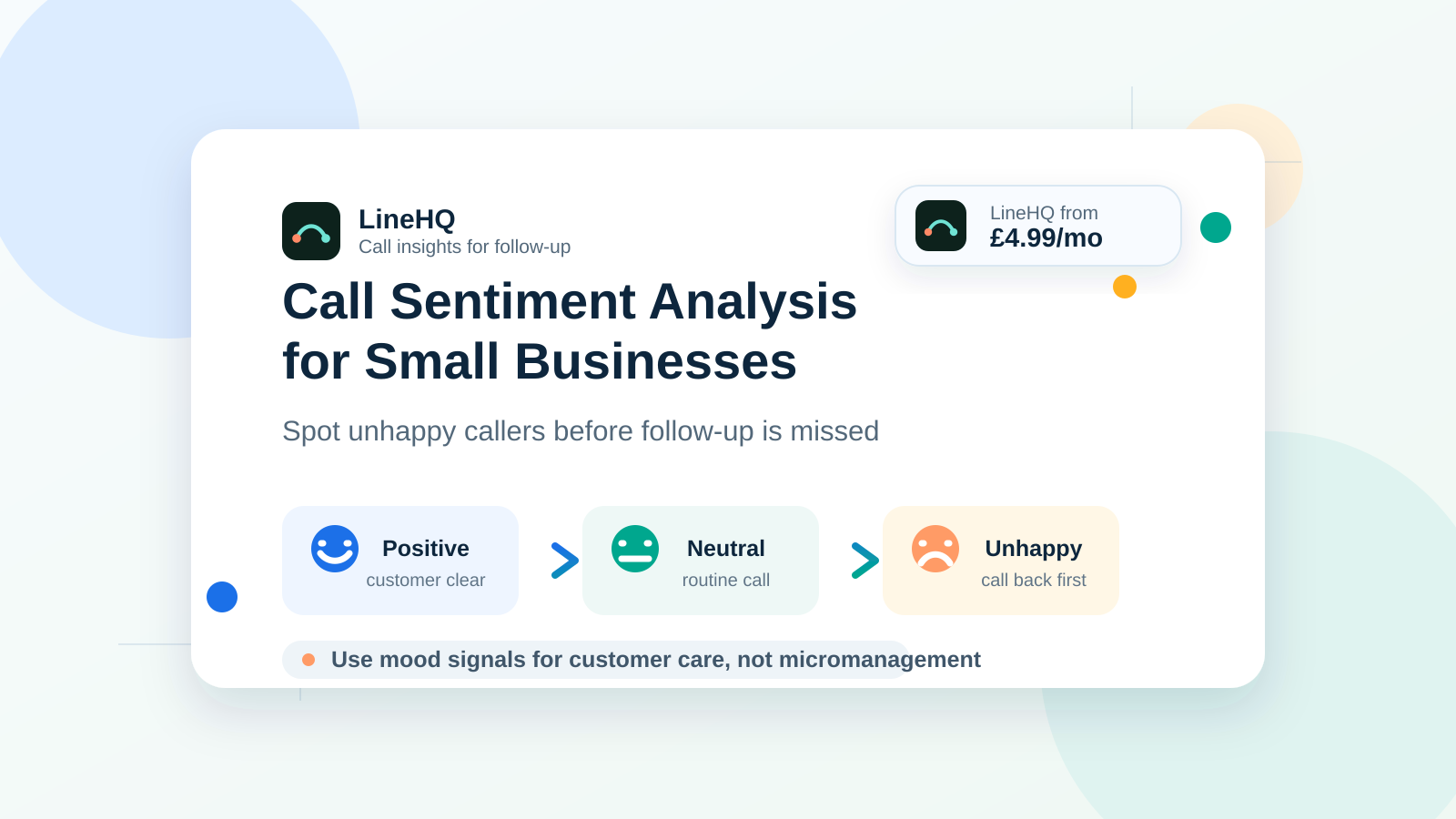
Caller sentiment is a signal, not a final judgement. It can help you spot calls that may need faster attention, such as a frustrated customer, a confused prospect or someone who sounded ready to buy but did not get a clear next step.
Used well, sentiment is about customer care. It helps the business decide which calls to review first. It should not be used as a lazy way to score staff without context.
| Signal | What it can help with | How to use it sensibly |
|---|---|---|
| Positive caller sentiment | Spot warm enquiries, good service moments and happy customers. | Follow up while interest is fresh, or use the call as a service example. |
| Neutral caller sentiment | Understand routine bookings, questions and admin calls. | Check whether the caller received a clear answer and next step. |
| Negative caller sentiment | Find complaints, confusion, delays or callbacks that may be urgent. | Review the transcript and recording before deciding what happened. |
Examples: quotes, complaints, missed details and callback promises
AI summaries become useful when they turn ordinary calls into clear actions. Here are common examples for UK small businesses.
Quote requests
A caller asks for a price, explains the job and mentions they need it done before Friday. The summary should highlight the deadline, the service needed and the promised next step.
Complaints or service issues
A customer calls because an appointment was missed or an order has not arrived. The summary can flag the issue, but the transcript and recording should still be checked before replying.
Missed details
A caller gives a gate code, parking note, product size or preferred appointment window. These are small details, but they can make the difference between a smooth job and a wasted visit.
Callback promises
Someone on the team says they will ring back after checking something. A summary makes that promise visible, especially if the person who took the call is then out on another job.
How to use call summaries without micromanaging your team
The healthiest way to use business call summaries is to improve follow-up, not to pick through every sentence your team says. Set a clear rule: summaries help the business serve customers better, keep promises and spot calls that need attention.
That means reviewing the calls that matter most: missed opportunities, complaints, high-value enquiries, callbacks and calls where the next step is unclear. It does not mean listening to every routine call just because the data exists.
If you record calls, make sure your business understands its responsibilities around notice, lawful basis, storage and access. For more on that topic, read our guide to UK call recording rules for small businesses.
What to look for in a small-business phone system
If you want call summaries to be genuinely useful, the phone system around them needs to be simple. Small teams usually need clear call routing, recordings, searchable call history and sensible follow-up tools more than a huge enterprise setup.
- A proper business number: keep customer calls away from personal mobiles with virtual phone numbers.
- Call recording: keep a source record for important calls where your business has a proper reason to record.
- Transcripts and summaries: help the team understand what happened without replaying every call.
- Call analytics: review missed calls, busy times and trends through business call analytics where available.
- Fair pricing: check what is included before comparing systems. LineHQ plans start from simple monthly pricing.
For context on why follow-up matters, read our guide to the true cost of a missed call. If calls are being routed to several people, our guide to one business number ringing multiple mobiles is also worth reading.
FAQs
What is an AI call summary?
An AI call summary is a short written recap of a phone call. It usually highlights why the person called, what was discussed, any important details and the next step the business should take.
Are AI call summaries accurate?
They can be very useful, but they should not be treated as perfect. For sensitive, disputed or high-value calls, check the transcript or recording before making a decision.
Can I search call transcripts?
A searchable transcript lets you find names, products, dates, objections, complaints and promised callbacks faster than replaying a whole recording. This is especially useful when several people handle calls.
Does caller sentiment replace listening to recordings?
No. Sentiment can help you prioritise which calls to review first, but it does not replace judgement. Use it as a signal, then check the transcript or recording where the detail matters.
Is this useful for small teams?
Yes. Small teams often benefit most because the same people are handling sales, service and admin. A clear call summary helps everyone follow up without relying on memory.
Want to know what happened on every call without listening to every call? LineHQ gives small businesses a professional phone number, call recording, transcripts, AI summaries and call insight tools from one simple setup. See LineHQ pricing or start with a virtual business number.